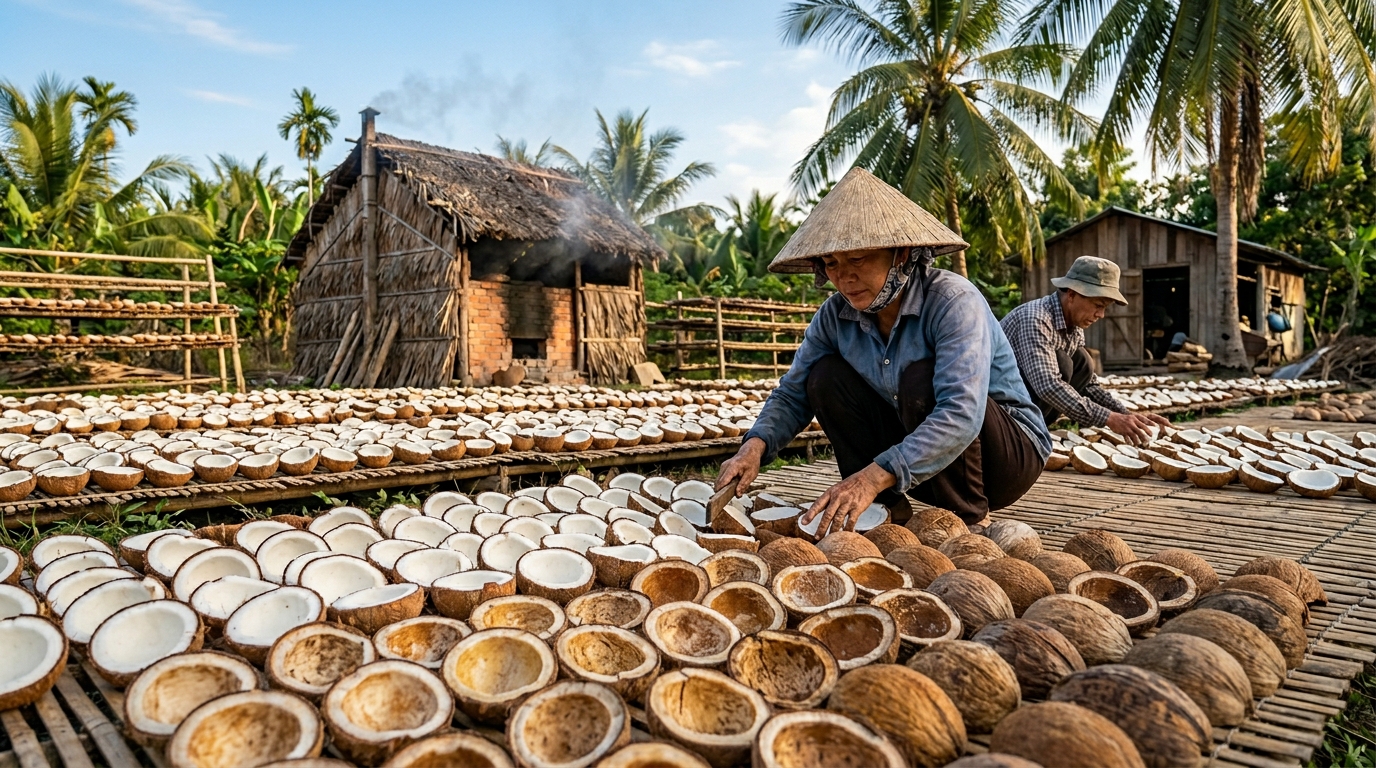
The Vietnamese coconut sector is rapidly expanding and modernizing. Vietnam now has roughly 200,000 hectares of coconut plantations (primarily in the Mekong Delta), yielding about 1.7 million tonnes of coconuts in 2024. With new plantings each year, harvested area and output are expected to rise (192,000 ha and 1.73 million t by 2026). Major growing provinces like Vĩnh Long have leveraged favorable soil and climate plus high-quality planting stock to develop even organic-certified coconut cultivation. As a result, Vietnam’s coconut exports (including oil) are booming. In the first half of 2025 alone the country’s four key coconut product groups (fresh coconut, coconut milk products, crude oil, and coconut-based foods/cosmetics) fetched over US$520 million, a >20% jump over 2024. Industry analysts now project full-year 2025 coconut exports reaching US$1.1–1.15 billion (up ~20–25% YoY), keeping Vietnam among the world’s top five coconut exporters.
Production and Processing Capacity
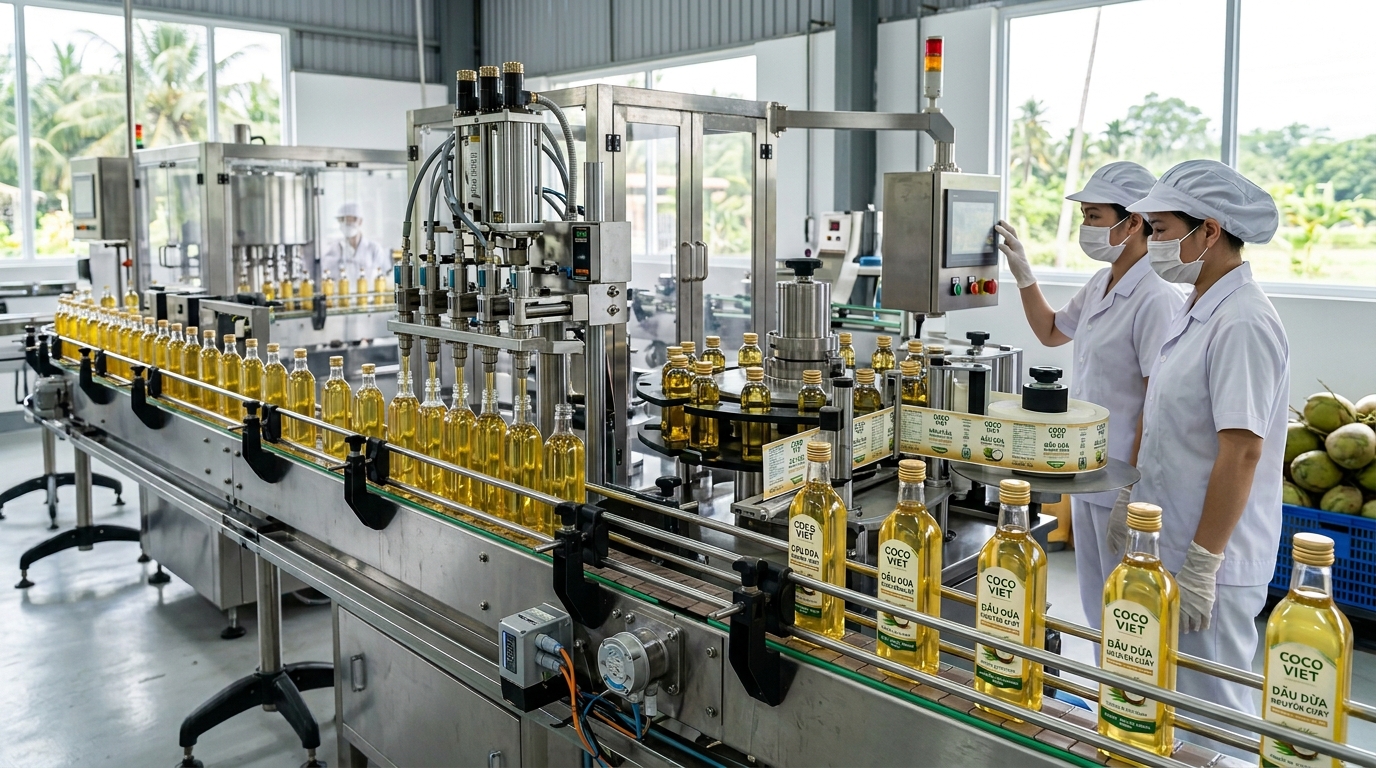
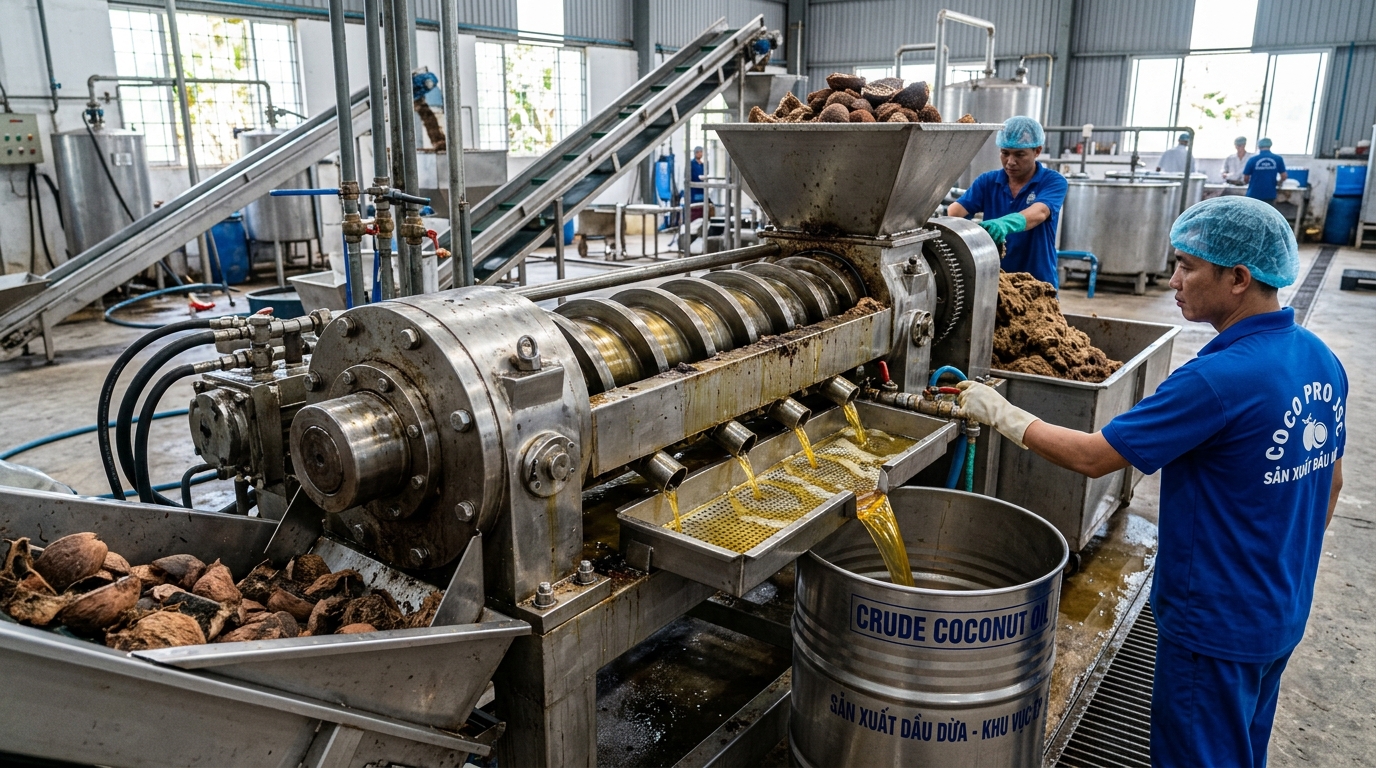
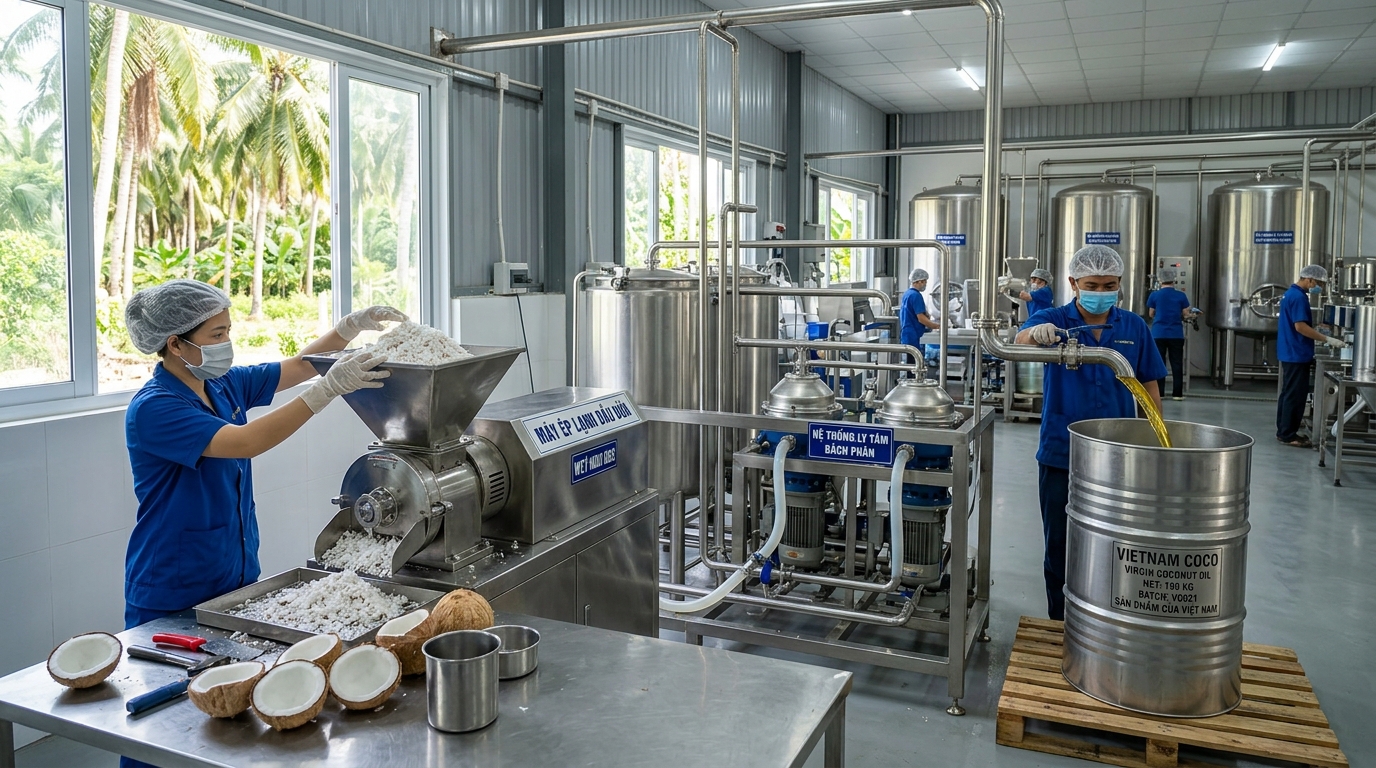
Coconut oil processing in Vietnam is centered in the Mekong Delta (especially Vĩnh Long, Bến Tre, An Giang, Cà Mau). These provinces account for over half the national coconut area. Local factories use modern extraction methods (both cold-pressed virgin oil and refined/bleached/deodorized oil) to meet diverse market needs. The country’s installed capacity is roughly 15,000 tonnes per year of coconut oil: about 10,000 t of refined/crude oil plus 5,000 t of premium virgin oil. Current copra-crushing totals are forecast at 24,000 t (milling copra) to support this output. For context, Vietnam produced only ~10,000 t of coconut oil annually in 2022–2024, but is projecting 14,000 t by 2025 as exports grow. This expansion comes even as global coconut oil output has stagnated (≈3.67 M t in 2024–25 worldwide), so Vietnam’s increased capacity helps fill tightening demand.
“Most local coconut processors are located in Vĩnh Long province, which has the largest coconut growing area. The total estimated annual production capacity [in Vietnam] is 10,000 tons of crude and refined coconut oil and 5,000 tons of virgin coconut oil for both domestic and export markets.”.
Vietnam is actively improving processing standards. Only about 30% of raw coconuts are currently turned into deeply processed products (oil, milk powder, etc.), but this is rising. Enterprises are investing in modern aseptic and cold-press technologies to capture more value from each nut. A growing number of facilities hold international certifications (e.g. HACCP, ISO, organic/USDA/EU) to serve high-end buyers. Traceability systems and organic farming initiatives (prohibiting harmful pesticides) are being implemented to meet US/EU/Japan quality standards.
Vietnam’s warm, humid Mekong Delta climate is ideal for coconuts. Modern mills in the region produce clear, high-grade coconut oil for export. Virgin coconut oil (VCO) from Vietnam is prized for its purity. According to the company’s specification sheet, our VCO is a homogeneous, transparent liquid with no foreign odor or taste. Key quality parameters include: free fatty acids (as lauric acid) ≤0.10%, acid value ≤0.6 mg KOH/g, peroxide value ≤2 meq/kg, moisture ≤0.20%, insoluble impurities ≤0.05%, and soap (alkali) ≤0.01%. Heavy metals are kept at trace levels (lead, arsenic <0.1 mg/kg; iron ~1.5 mg/kg; copper ~0.1 mg/kg), and no aflatoxins or microbiological contaminants are detected (Salmonella negative, coliforms and yeast/mold <10 cfu/g) in our hygiene testing. These figures meet or exceed Vietnamese national standards (TCVN) and relevant ISO/ASTM benchmarks for edible oil and cosmetics use.
Buyers’ Benefits & Applications
Vietnamese coconut oil offers multiple advantages to global buyers and manufacturers:
Natural and Nutrient-Rich – As a rich source of medium-chain fatty acids (notably lauric acid), virgin coconut oil is valued for its stability and health-related properties. It is widely used in food (cooking, baking, tropical-flavored snacks, dairy alternatives, confectionery) because it imparts a mild coconut aroma and high smoke point. In cosmetics and personal care, coconut oil serves as an excellent moisturizer, skin conditioner, and surfactant base (shampoos, body lotions, soaps) due to its emollient and antimicrobial qualities. It is also used in pharmaceuticals and nutraceuticals (MCT oil supplements, dermatological balms) where food-grade purity is required.
Strict Safety and Purity – Coconut oil is produced under stringent GMP/HACCP conditions and fully tested for food safety. The oil contains no chemical solvents, pesticides, or genetic modification – consistent with Vietnam’s large organic-certified coconut acreage. Compliance with EU/US/Japan import standards is assured by rigorous quality control (e.g. heavy metals and pesticide residues well below international limits).
Sustainability and Traceability – Vietnamese suppliers are increasingly adopting eco-friendly practices. Many plantations are Rainforest Alliance or organic certified, and community cooperatives emphasize sustainable farming. Suppliers can provide traceable origin documentation down to grower level. This aligns with consumer demand for ethically sourced ingredients.
Competitive Pricing and Supply – Although global coconut oil prices have climbed in recent years, Vietnam offers attractive supply options. Its proximity to major markets (East Asia, Oceania, Middle East) and new cold-chain logistics routes (e.g. shipments to China) help lower freight costs. Vietnamese companies also benefit from trade agreements and steadily improving infrastructure. Moreover, the robust growth of Vietnam’s coconut processing sector (with dedicated export codes now granted by China) helps ensure reliable year-round supply, even as world output has remained flat.
Common specifications and uses include:
Food Grade (Refined and Virgin) – Cooking oil, bakery ingredients, chocolate coatings, coconut cream powder, etc.
Cosmetic Grade (Extra-Virgin) – Skin creams, hair oils, lip balms, natural deodorants.
Specialty Grade – Biofuel additives, soaps and surfactants, nutraceutical formulations.
By offering both virgin (unrefined) and refined/bleached/deodorized (RBD) grades, Vietnamese exporters can meet a range of formula and cost needs. In particular, our premium VCO stands out for its clear appearance and delicate flavor, ideal for gourmet foods and high-end skincare.
Global Demand and Competitive Edge
Worldwide demand for coconut oil remains strong. Analysts report that global production (~3.67 M tonnes in 2024–25) has not grown for decades, even as consumption surges. This has driven prices to record highs and made reliable suppliers critical. Vietnam’s expanding output thus plays a strategic role for many importers. The country already supplies key markets: in 2025 the United States alone took about 26% of Vietnam’s total coconut export revenue, while growing volumes also go to Europe (Spain, Germany), East Asia (China, Japan, Korea) and Oceania. As markets seek quality and consistency, Vietnam’s reputation is rising – aided by success stories like Vinh Long’s organic coconut cooperatives and government support programs.
Vietnam has also secured new market access recently: for example, Chinese customs have opened multiple export zones for fresh coconuts from Vietnam, and importers report smoother certification processes. Moreover, Vietnamese coconut exporters are attending more international trade fairs and developing brand strategies to highlight their sustainable sourcing and premium quality.
Key advantages of Vietnamese coconut oil
Consistent high quality, strict safety compliance, and growing scale of supply. The industry’s focus on deep processing means buyers can expect innovation (e.g. high-stability oils, powdered products) and value-added services (private labeling, specialized packaging). Government and industry initiatives to improve product traceability and soil health (including use of GIS mapping for plantations) will further boost buyer confidence.
Vietnamese coconut oil is thus emerging as a compelling choice for international importers and manufacturers. Its combination of tropical quality, modern processing, and competitive cost makes it suitable for gourmet foods, wellness brands, and industrial users alike. By partnering with Vietnamese suppliers, buyers gain access to a dynamic sector poised to meet the premium natural oil demand of the 2020s.
Adalidda supplies premium coconut oil to importers and manufacturers worldwide. We offer bulk shipment starting at 15,000 MT, packed in 24,000 L flexitanks for safe, cost-efficient transport. For competitive quotations, specifications (COA, spec sheet), GACC certificate, and long-term supply agreements, please contact our sales team.
WhatsApp channel: https://whatsapp.com/channel/0029Va9I6d0Dp2Q2rJZ8Kk0x
Bibliography
Vietnam News – “Việt Nam can reach US$1.15 billion in coconut exports by end-2025” (Viet Nam News, Sep 15 2025).
Agri & Rural Development News (VAN) – “Coconut exports grow over 20% in the first half of the year” (van.nongnghiepmoitruong.vn, Mar 30 2026).
USDA Foreign Agricultural Service – “Oilseeds and Products Update” (VM2025-0036, Hanoi, Oct 2025).
Agrideco Vietnam Co., Ltd. – “The export potential of Vietnamese coconut products is increasing strongly” (Dec 24 2025).
Reuters – “Humble coconut oil turns into a luxury on rising demand, shrinking output” (Aug 20 2025).
apps.fas.usda.gov
https://apps.fas.usda.gov/newgainapi/api/Report/DownloadReportByFileName?fileName=Oilseeds%20and%20Products%20Update_Hanoi_Vietnam_VM2025-0036.pdf
The export potential of Vietnamese coconut products is increasing strongly - Agrideco Vietnam Co., Ltd.
https://agridecovietnam.com/the-export-potential-of-vietnamese-coconut-products-is-increasing-strongly/
Coconut exports grow over 20% in the first half of the year
https://van.nongnghiepmoitruong.vn/coconut-exports-grow-over-20-in-the-first-half-of-the-year-d771855.html
Việt Nam can reach US$1.15 billion in coconut exports by end-2025
https://vietnamnews.vn/economy/1725190/viet-nam-can-reach-us-1-15-billion-in-coconut-exports-by-end-2025.html
Humble coconut oil turns into a luxury on rising demand, shrinking output | Reuters
https://www.reuters.com/world/china/humble-coconut-oil-turns-into-luxury-rising-demand-shrinking-output-2025-08-20/